Feeling Stiff After 40? Why More Stretching Isn’t Always the Answer
What Mobility Really Means—and Why Strength, Control and Movement Matter Too
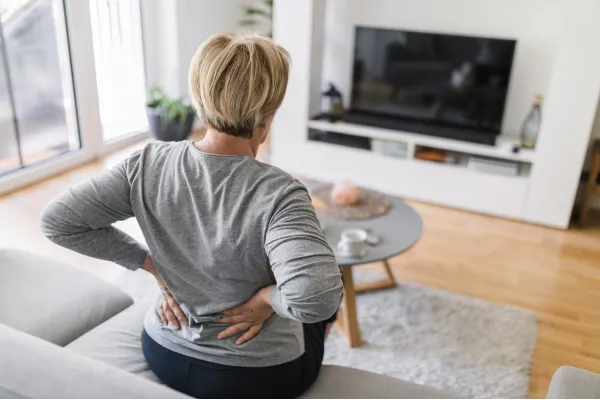
You stand up after sitting for a while and everything feels…stiff.
Your hips feel tight.
Your shoulders don’t move quite like they used to.
Maybe touching your toes feels farther away than it did ten years ago.
So naturally, you think:
I need to stretch more.
Sometimes, stretching may be exactly what you need.
But here’s something many women don’t realize:
Feeling stiff doesn’t automatically mean you need more stretching.
How well you move can involve much more than how far a muscle can stretch. Your available range of motion, strength, stability, control, movement patterns, activity history and individual anatomy can all play a role.
That’s where understanding mobility becomes useful.
Flexibility and Mobility Aren’t Exactly the Same Thing
We often use these words interchangeably, but they’re not quite the same.
Flexibility generally refers to the available range of motion around a joint or the ability of tissues to lengthen.
Mobility is a broader coaching concept. It includes your ability to actively move through a useful range of motion with control.
Here’s a simple example.
You may be able to pull your knee toward your chest with your hands while lying down.
But can you actively use the movement available to you when you squat, step up or climb stairs?
Having access to a range of motion and being able to use and control that range aren’t always the same thing.
And that’s one reason stretching alone doesn’t solve every movement limitation.
Stretching Isn’t Bad
Let’s get this out of the way.
Stretching can absolutely improve range of motion.
Research supports that.
It can feel good.
It can be useful when a particular range of motion is limited.
And it may be an appropriate part of a warm-up, cooldown or individualized mobility program depending on the person and the goal.
So this isn’t:
“Stop stretching.”
It’s:
“Know why you’re stretching.”
If you’re doing the same stretches every day because your hips always feel tight—but nothing seems to change—it may be time to look at the bigger picture.
Strength Training Can Improve Range of Motion Too
This surprises a lot of people.
Strength training doesn’t automatically make you “tight.”
Research has found that resistance training performed through appropriate ranges of motion can improve joint range of motion. In studies directly comparing resistance training and stretching, neither approach has consistently emerged as superior for improving range of motion.
Think about what happens when you perform a well-controlled squat.
Your hips, knees and ankles move through a range of motion while your muscles produce and control force.
Or consider a properly performed Romanian deadlift.
You’re not simply lengthening the muscles on the back of your legs.
You’re learning to control a hip hinge and produce force through the range available to you.
This is one reason we like training movement—not just stretching muscles.
Strength and mobility don’t have to compete.
Done appropriately, they can support each other.
More Mobility Isn’t Automatically Better
You don’t need unlimited range of motion.
You need enough movement for the things you want and need to do—and the ability to control it.
A gymnast and a woman who wants to strength train, garden, travel, golf and play with her grandchildren don’t necessarily need the same ranges of motion.
And not everyone needs to touch their toes, perform the deepest possible squat or have identical shoulder mobility.
The better question is:
Do you have the movement you need to do the things you want to do comfortably and confidently?
That changes the goal from becoming “more flexible” to becoming more capable.
Feeling Tight Is a Clue—Not a Diagnosis
This distinction is important.
The sensation of tightness tells us something about what you’re experiencing.
It doesn’t necessarily tell us why you’re experiencing it.
Movement can be influenced by many things, including:
How much time you spend in the same positions
Your activity and training history
Your available range of motion
Strength and control through that range
Previous injuries
Pain
Individual anatomy
That’s why we don’t want to automatically prescribe a stretch simply because a particular area feels tight.
Instead, we want to look at how the individual moves.
This Is Why We Assess Before We Guess
Imagine two women who both tell us:
“My hips are really tight.”
Their complaint sounds identical.
What we see when they move may not be.
One person may demonstrate a limitation that makes targeted mobility or flexibility work appropriate.
Another may need more stability or strength.
Another may have adequate available motion but struggle to control it during a squat or single-leg movement.
And another may need an exercise modified while she develops the ability to perform it well.
That’s why assessment matters.
We assess movement before deciding what someone needs.
And then we continue observing and reassessing rather than assuming the first strategy will always be the right one.
If pain, injury or symptoms outside our coaching scope are involved, that’s also when the right answer may be referral to an appropriate healthcare professional.
What Mobility Work Can Actually Look Like
Mobility work doesn’t have to mean sitting on the floor stretching for 30 minutes.
Depending on what your individual assessment and goals indicate, it might include:
Targeted flexibility or mobility work
When a specific movement limitation would benefit from it, stretching or mobility exercises can be used intentionally.
Strength through an appropriate range of motion
Squats, hinges, presses, rows, lunges and other movements can build strength while helping you learn to control useful ranges of motion.
Stability and control
Sometimes accessing a position isn’t the primary challenge.
Controlling your body within that position is.
Integrated movement
Ultimately, we want improvements to carry over into the movements you actually need—whether that’s squatting, stepping, reaching, lifting, carrying or something specific to your sport or life.
Gradual progression
As your movement improves, your program can progress with you.
The important part isn’t collecting more mobility exercises.
It’s choosing the right tools for the person in front of us.
What We See at 2PiFit
Women often come to us saying:
“I’m just not flexible.”
Or:
“I’ve always been tight.”
But we’re usually less interested in whether someone can pass an arbitrary flexibility test and more interested in what her movement allows her to do.
Can you squat comfortably?
Can you reach overhead for something on a shelf?
Can you rotate when you’re golfing?
Can you get down to the floor—and back up?
Can you step, bend, carry and reach confidently?
Those are the movements that matter.
Sometimes improving them involves flexibility or mobility work.
Sometimes it involves getting stronger.
Sometimes we need to improve stability and control.
Often, several pieces work together.
We’re not trying to make you flexible for the sake of being flexible.
We’re helping you build a body that moves well enough to do life.
When Stiffness Deserves More Attention
Feeling a little stiff after sitting for hours or after an unfamiliar workout is one thing.
Persistent pain, a sudden change in mobility, swelling, numbness or tingling, unexplained weakness, symptoms following an injury, or a limitation that continues to worsen deserves a different approach.
That’s not the time to aggressively stretch through it.
Talk with an appropriate healthcare professional who can evaluate what’s going on.
Good coaching also means knowing when something belongs outside the coaching lane.
So, Should You Stretch?
Sure—when it serves a purpose.
But don’t assume every area that feels tight simply needs more stretching.
Instead, think about better questions:
What movement am I trying to improve?
What do I see when I actually perform that movement?
Do I need more available range, better control or greater strength?
What strategy actually improves how I move?
Those questions lead to a much more individualized approach than simply collecting stretches from social media.
A Coach’s Perspective
One thing we want women to stop believing is that feeling stiff means their body is simply “getting old.”
Your body can continue adapting.
You can improve range of motion.
You can get stronger.
You can improve stability and control.
And you can become more confident performing movements that once felt difficult.
The goal isn’t to move exactly like you did at 20.
It’s to continue developing the movement you need for the life you’re living now—and the life you want later.
The Takeaway
Mobility isn’t about becoming the most flexible person in the room.
It’s about having enough movement—and enough control of that movement—to do what matters to you.
Stretching can be part of that.
So can strength training.
So can stability, integrated movement and individualized corrective work.
What belongs in your program depends on what you actually need.
So the next time something feels tight, don’t automatically assume:
“I need to stretch more.”
Remember:
Feeling tight is a clue—not a diagnosis.
The better question is:
“What does my body need to move better?”
Because the goal isn’t simply more range of motion.
The goal is usable movement for real life.
References
Alizadeh S, Daneshjoo A, Zahiri A, et al. Resistance Training Induces Improvements in Range of Motion: A Systematic Review and Meta-Analysis. Sports Medicine. 2023.
Afonso J, Ramirez-Campillo R, Moscão J, et al. Strength Training versus Stretching for Improving Range of Motion: A Systematic Review and Meta-Analysis. Healthcare. 2021.
Pallarés JG, Hernández-Belmonte A, Martínez-Cava A, et al. Effects of Range of Motion on Resistance Training Adaptations: A Systematic Review and Meta-Analysis. Scandinavian Journal of Medicine & Science in Sports. 2021.
National Academy of Sports Medicine. Current guidance on movement assessment, the Corrective Exercise Continuum, flexibility and individualized exercise programming.
American College of Sports Medicine. Current exercise testing and prescription guidance.
Disclaimer: This blog post is for informational purposes only and is not intended to diagnose, treat, or replace medical advice from your healthcare provider. Always consult with your physician or a qualified health professional before making significant changes to your diet, exercise routine, or health practices.


