Why Does Everything Feel Different?
Understanding the Menopause Transition—and What You Can Do to Support Your Body
Maybe you’ve caught yourself thinking:
I’m eating pretty much the same way.
I’m still exercising.
I’m trying to take care of myself.
So why does everything suddenly feel different?
Maybe your sleep has changed. Your energy isn’t as predictable. Your workouts feel different. Your body composition seems to be shifting. Your period has become less predictable. Or you simply don’t feel quite like yourself.
For many women, these changes begin during the menopause transition—often years before their final period.
And yet, no two women experience this transition exactly the same way.
Understanding what’s happening doesn’t mean blaming everything on hormones. It means recognizing that your body may be changing and learning how to support it through this next stage of life.
First, What Exactly Is the Menopause Transition?
Menopause isn’t something that suddenly happens one day.
Perimenopause is the transition leading up to menopause. During this time, ovarian hormone patterns change and menstrual cycles may become less predictable. Some women experience noticeable symptoms; others experience relatively few.
Menopause is reached after 12 consecutive months without a menstrual period, when there isn’t another medical explanation.
Postmenopause refers to the years that follow.
During this transition, women may experience changes that include:
Hot flashes or night sweats
Changes in sleep
Menstrual cycle changes
Mood changes
Vaginal or urinary symptoms
Changes in body composition
Changes in energy or how they feel during recovery and exercise
But here’s an important point:
Not everything that changes in your 40s and 50s is automatically caused by menopause.
Aging is happening at the same time. So are changes in sleep, stress, activity, nutrition, work and family demands. Medications and medical conditions can also affect how you feel.
That’s why we don’t want to reduce every symptom—or every change on the scale—to “your hormones.”
Your Body May Be Changing. Your Metabolism Isn’t Broken.
This is an especially important conversation because many women notice that their bodies begin responding differently during midlife.
Research suggests that the menopause transition is associated with changes in body composition, including a tendency toward greater abdominal or visceral fat and changes in lean mass. At the same time, chronological aging, physical activity, nutrition, sleep and other lifestyle factors are also contributing.
What the research does not support is the idea that menopause simply “breaks your metabolism” or makes healthy change impossible.
And that’s an important distinction.
When women notice their body changing, the instinct is often to eat less and exercise more.
But this is a stage of life when protecting muscle, bone, cardiovascular health, recovery and overall well-being becomes increasingly important.
Making yourself smaller at any cost isn’t the goal.
Building a strong, healthy and capable body for the decades ahead is.
This Is Where Muscle Matters
Skeletal muscle isn’t just about how your body looks.
It helps support strength, physical function, metabolic health and your ability to continue doing the things you love as you age.
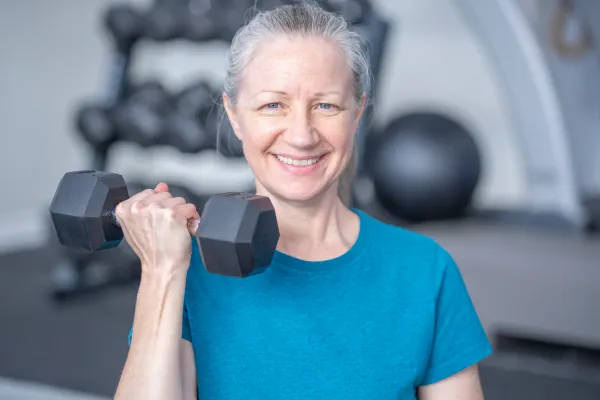
That’s one reason resistance training becomes such an important part of the conversation during midlife.
Adequate nutrition matters, too—especially consuming enough overall energy and protein to support training, recovery and lean tissue.
Research in female exercise and sports nutrition also supports paying particular attention to protein intake and distribution as women move through the peri- and postmenopausal years.
We’ll talk much more about how women over 40 should train in our next blog, because this topic deserves more than a few paragraphs.
For now, the important message is simple:
This isn’t the time to stop challenging your body. It’s the time to become more intentional about how you support it.
Healthy Habits Matter—but They Aren’t a Cure for Menopause
This distinction matters enormously.
Strength training.
Good nutrition.
Regular movement.
Adequate sleep.
Stress management.
All of these support health during the menopause transition.
But we never want a woman to hear that if she just exercises correctly, eats perfectly and manages her stress, she shouldn’t experience menopause symptoms.
That’s not what the evidence says.
In fact, The Menopause Society’s evidence review found that while exercise has tremendous benefits for overall health, it should not currently be presented as a proven treatment specifically for vasomotor symptoms such as hot flashes.
That’s a great example of why nuance matters.
Exercise is incredibly valuable during menopause.
That doesn’t mean exercise treats everything menopause can bring.
And if you’re experiencing symptoms that are disrupting your sleep, quality of life, relationships, ability to exercise or daily functioning, you don’t have to simply “push through.”
Talk with a healthcare provider who is knowledgeable about menopause.
Evidence-based medical treatment options exist, and what is appropriate should be determined individually with your provider.
So, What Can You Focus On?
You don’t need a complicated “menopause protocol.”
Start with the foundations that support your health now and in the decades ahead.
1. Build and protect muscle.
Make progressive resistance training a priority. Muscle and strength become increasingly valuable assets as we age.
2. Fuel your body.
Prioritize adequate nutrition rather than automatically responding to body changes by drastically cutting calories. Include enough protein throughout your day to support muscle, training and recovery.
3. Think beyond the scale.
Body weight is only one piece of your health. Muscle mass, strength, bone health, cardiovascular fitness, energy, sleep and how well your body functions all matter.
4. Take recovery seriously.
Your ability to recover can be influenced by sleep, stress, nutrition, training load and menopausal symptoms. More exercise isn’t automatically better exercise.
5. Get the right medical support when you need it.
Lifestyle coaching and medical care aren’t competing approaches.
They can—and often should—work together.
What We See at 2PiFit
Many of the women we coach come to us frustrated because the strategies that worked for them years ago don’t seem to be producing the same results anymore.
Their first instinct is often:
“I need to work harder.”
“I need to eat less.”
“I need to be more disciplined.”
Our first question is different:
What does your body need from you now?
Sometimes the answer is a smarter training stimulus.
Sometimes it’s more consistent fueling.
Sometimes it’s better recovery.
Sometimes it’s adjusting expectations.
And sometimes the answer belongs in a conversation with her healthcare provider.
Our job isn’t to convince women to fight their changing bodies.
It’s to help them understand those bodies, build strength and create strategies that support where they are today.
A Coach’s Perspective
The menopause transition can feel frustrating, especially when you’ve spent years believing that if you just work hard enough, your body should respond a certain way.
But harder isn’t always the answer.
Different may be.
Your body may need a different training stimulus, more attention to recovery, better fueling or medical support for symptoms that shouldn’t simply be ignored.
Learning what your body needs now isn’t giving in to aging.
It’s learning how to get stronger through it.
The Takeaway
Yes, your body may change during the menopause transition.
But change doesn’t mean decline is inevitable.
And it certainly doesn’t mean you’ve lost your ability to influence your health.
You can build muscle.
You can get stronger.
You can improve your fitness.
You can support your bones, heart and metabolic health.
You can learn how to fuel and recover differently.
And you can seek appropriate treatment when symptoms are affecting your quality of life.
Your body is changing. Your ability to influence your health hasn’t disappeared.
The goal isn’t to get your 30-year-old body back.
It’s to build the strongest, healthiest version of the body you’re living in now.
References
The Menopause Society. The 2022 Hormone Therapy Position Statement of The North American Menopause Society. Menopause. 2022.
The Menopause Society. The 2023 Nonhormone Therapy Position Statement of The North American Menopause Society. Menopause. 2023.
Sims ST, et al. International Society of Sports Nutrition Position Stand: Nutritional Concerns of the Female Athlete. Journal of the International Society of Sports Nutrition. 2023.
Kodoth V, Scaccia S, Aggarwal B. Adverse Changes in Body Composition During the Menopausal Transition and Relation to Cardiovascular Risk: A Contemporary Review. Women’s Health Reports. 2022.
Szeliga A, Chedraui P, Meczekalski B. The Impact of the Menopausal Transition on Body Composition and Abdominal Fat Redistribution. Journal of Clinical Medicine. 2026.
American College of Sports Medicine. ACSM’s Guidelines for Exercise Testing and Prescription.
NASM. Evidence-based principles of resistance training, exercise programming and healthy aging.
Precision Nutrition. Evidence-informed nutrition, recovery and behavior-change coaching principles.
Disclaimer: This blog post is for informational purposes only and is not intended to diagnose, treat, or replace medical advice from your healthcare provider. Always consult with your physician or a qualified health professional before making significant changes to your diet, exercise routine, or health practices.


